What My Cultural Intelligence Assessment Said — and Whether It Was Right
📍 Organizational Behavior 📅 July 2, 2026 · 5 min read
A self-scored culture test labeled me a 'Chameleon.' The honest part was where my own scores disagreed with each other.
I scored my own cultural intelligence for a graduate course and came out looking good. That is exactly why I don’t trust the result — and why the reflection below spends more time on the cracks than on the score.
We all carry a private story about how well we read other people. Mine was that I read them well. Cultural competency is a skill I value, one I put on my resume, and one I quietly believed was a little rare.
Then a course asked me to actually measure it.
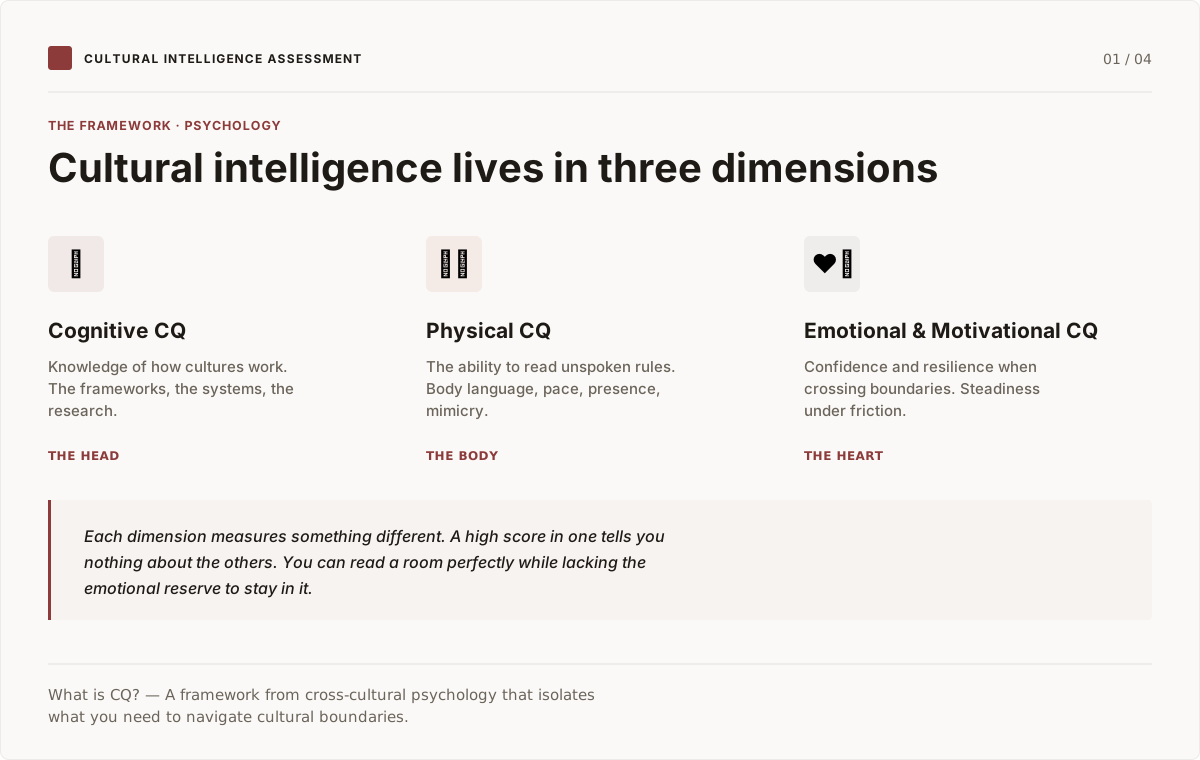
The assessment scores cultural intelligence across three components: the cognitive (the head), the physical (the body), and the emotional and motivational (the heart). Score yourself honestly across all three, then reflect on what the pattern reveals.
The catch is obvious once you say it out loud: I was scoring myself. I knew my self-perception was biased somewhere, and I could not locate the bias even with the test open in front of me. A high score I hand myself proves nothing except that I was in a generous mood that afternoon.
What the scores said
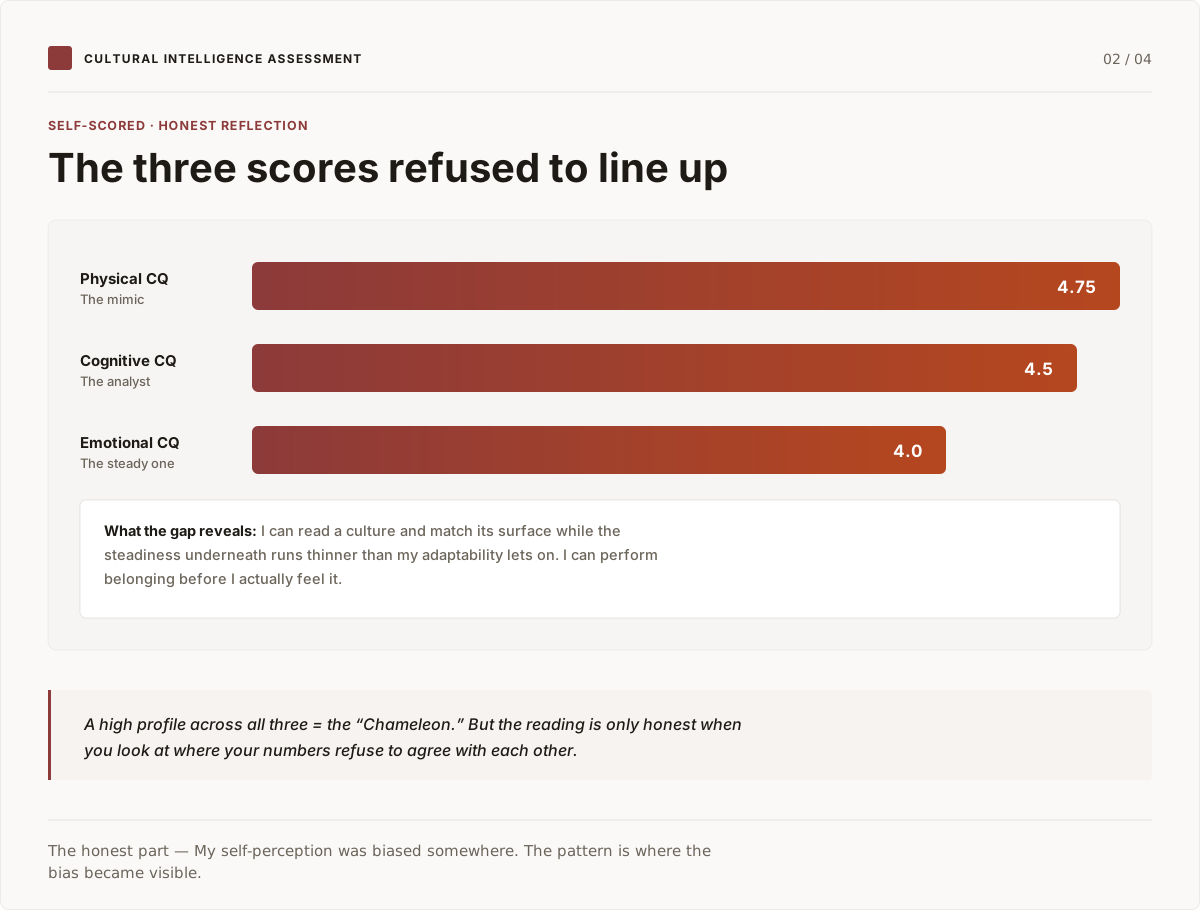
Here is what I gave myself, unedited:
- Cognitive CQ: 4.5
- Physical CQ: 4.75
- Emotional and Motivational CQ: 4.0
High across the board. The profile that fit was the “Chameleon,” someone who scores well on all three and adapts across different environments. If I had stopped there, this would be a bragging post, and you would be right to close the tab.
The interesting part is that the three numbers do not agree with each other.
Where the pattern got honest
Read in order, the three scores tell a story I did not set out to write:
- Physical, my highest. The mimic in me — the part that picks up on body language, pace, and the unspoken rules of a room and adjusts before I have consciously decided to.
- Cognitive, close behind. The analyst who studies how a culture works before stepping into it.
- Emotional and motivational, my lowest. Still high, but the clear laggard: the part meant to supply confidence and resilience, not just technique.
That third number is the whole report. I can read a culture and match its surface while the steadiness underneath runs thinner than my adaptability lets on. I can perform belonging before I actually feel it.
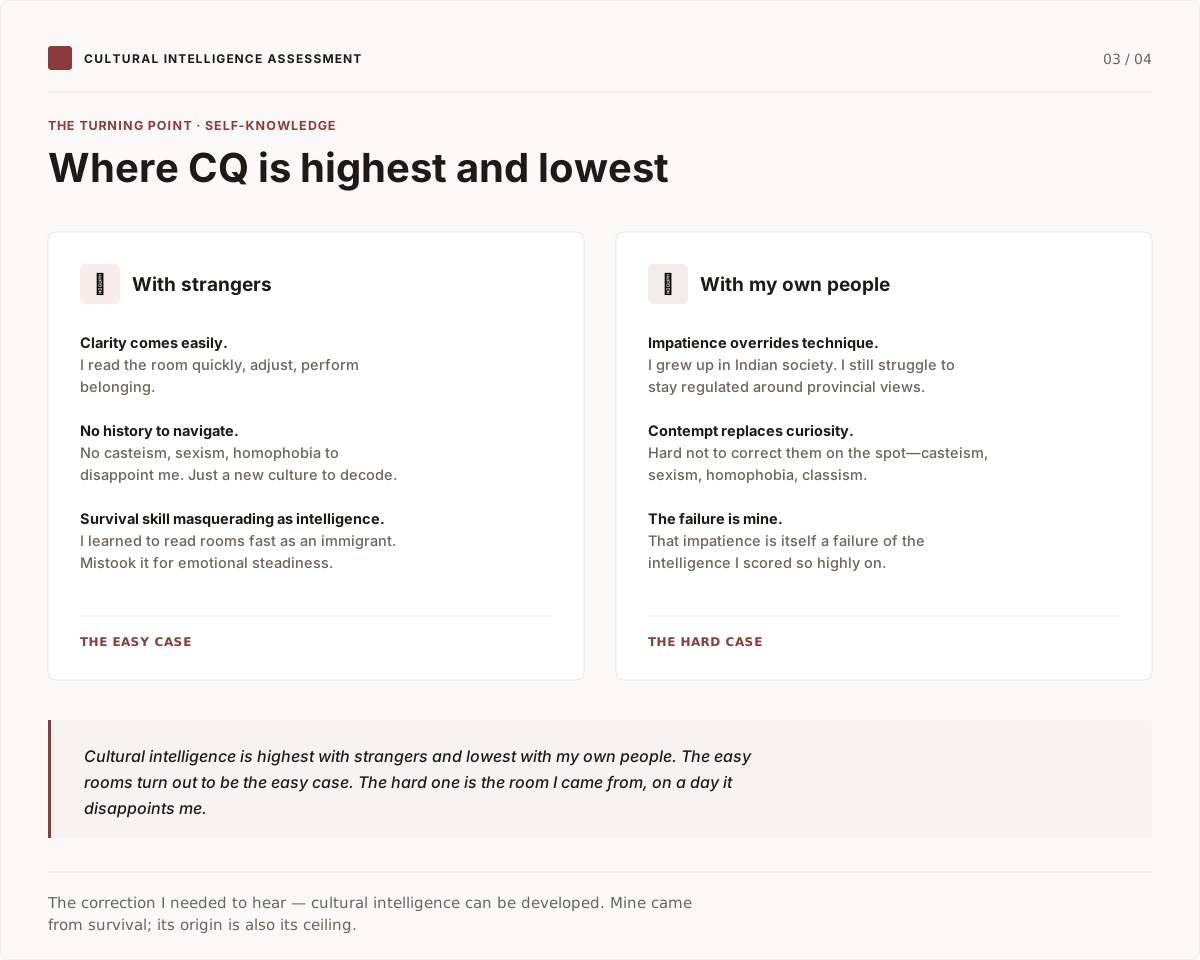
Then the reflection took a turn I had not planned. My cultural intelligence is highest with strangers and lowest with my own people. I grew up in Indian society, and I still struggle to stay regulated around compatriots who hold provincial views — casteism, sexism, homophobia, classism — and I find it hard not to correct them on the spot. That impatience is itself a failure of the intelligence I scored so highly on. The unfamiliar rooms I am proud of handling turn out to be the easy case; the hard one is the room I came from, on a day it disappoints me.
What I actually believe now
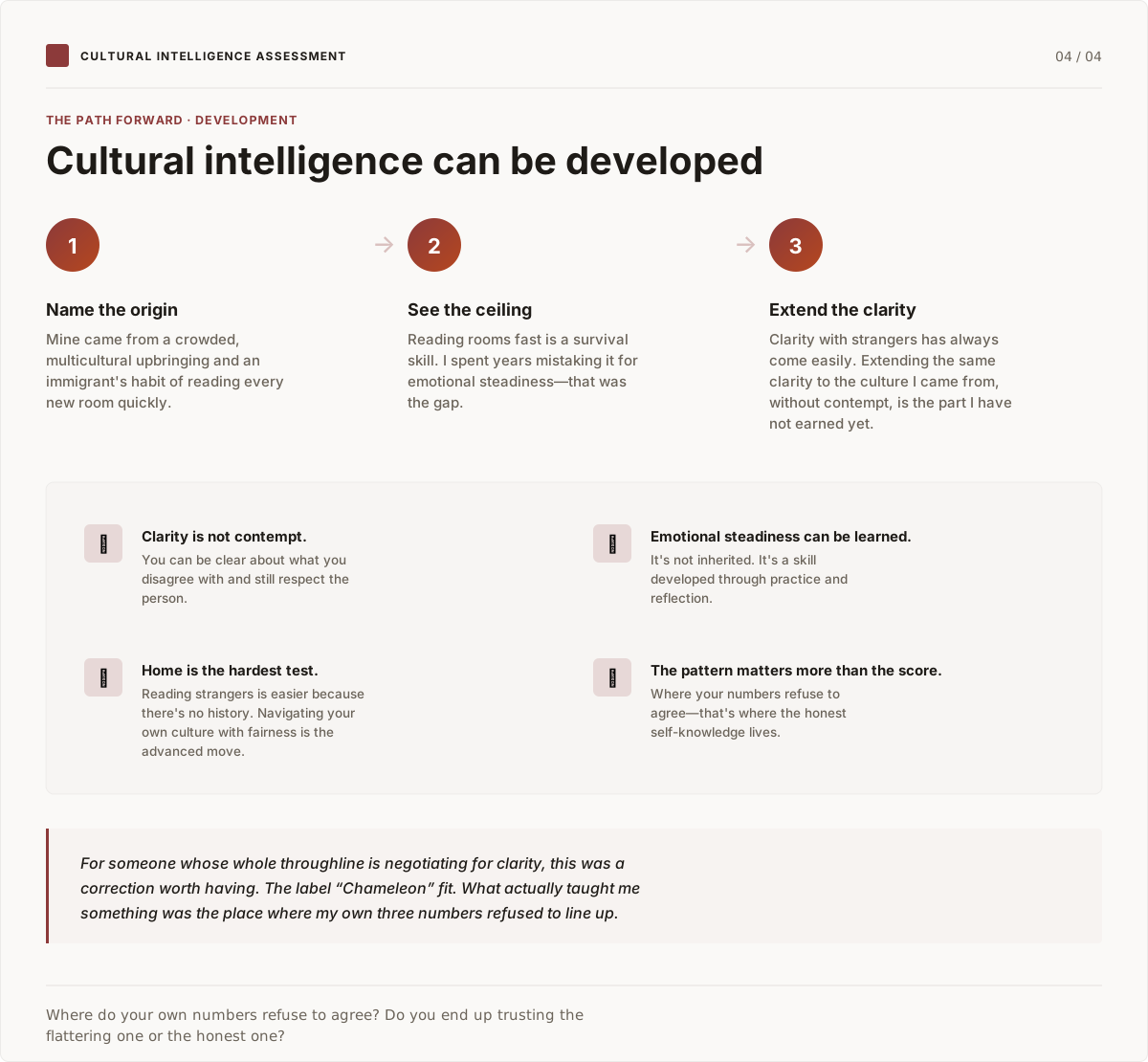
The reading also told me the thing I most needed to hear: cultural intelligence can be developed rather than simply inherited. I suspect mine came from a crowded, multicultural upbringing and an immigrant’s habit of reading every new room quickly. Its origin is also its ceiling. Reading rooms fast is a survival skill, and I have spent years mistaking it for emotional steadiness.
For someone whose whole throughline is negotiating for clarity, that was a correction worth having. Clarity with strangers has always come easily to me. Extending the same clarity to the culture I came from, without contempt, is the part I have not earned yet.
The label fit. Have you ever scored yourself on one of these instruments? I would genuinely like to know: did your mind-body-heart numbers misalign as well — and did you end up trusting the flattering one or the honest one?
Comments